



Hermansky-Pudlak Syndrome (HPS) is a rare inherited disorder causing albinism, dangerous bleeding problems, and life-threatening lung disease. It affects 1 in 500,000 people worldwide and remains severely underdiagnosed. Without early genetic testing, most patients don’t receive proper care until complications are irreversible.
Thousands of families spend years visiting specialists without answers. Surgeries happen without proper precautions. Lung damage progresses silently. Children grow up without a diagnosis that would change everything.
This guide covers HPS causes, symptoms, types, and why genetic testing changes everything.
What Is Hermansky-Pudlak Syndrome?
Hermansky-Pudlak Syndrome is a rare genetic condition disrupting pigmentation, blood clotting, and lung function simultaneously.
First described in 1959 by Czech physicians Frantisek Hermansky and Pavlina Pudlak, it remains one of the most underdiagnosed rare conditions worldwide.
HPS is most common in Puerto Rico, affecting 1 in 1,800 people in the northwestern region. Globally, it occurs in 1 in 500,000 to 1,000,000 individuals. Cases also appear in India, Japan, and Western Europe.
The Three Core Features of HPS:
Every person with Pudlak syndrome shares three characteristics:
- Oculocutaneous albinism: Reduced pigment in skin, hair, and eyes.
- Bleeding diathesis: Impaired blood clotting due to platelet dysfunction.
- Ceroid accumulation: A buildup of fatty pigment in body tissues.
Recognizing the Symptoms of Hermansky-Pudlak Syndrome
Symptoms are present from birth. However, most families don’t connect them until years later.
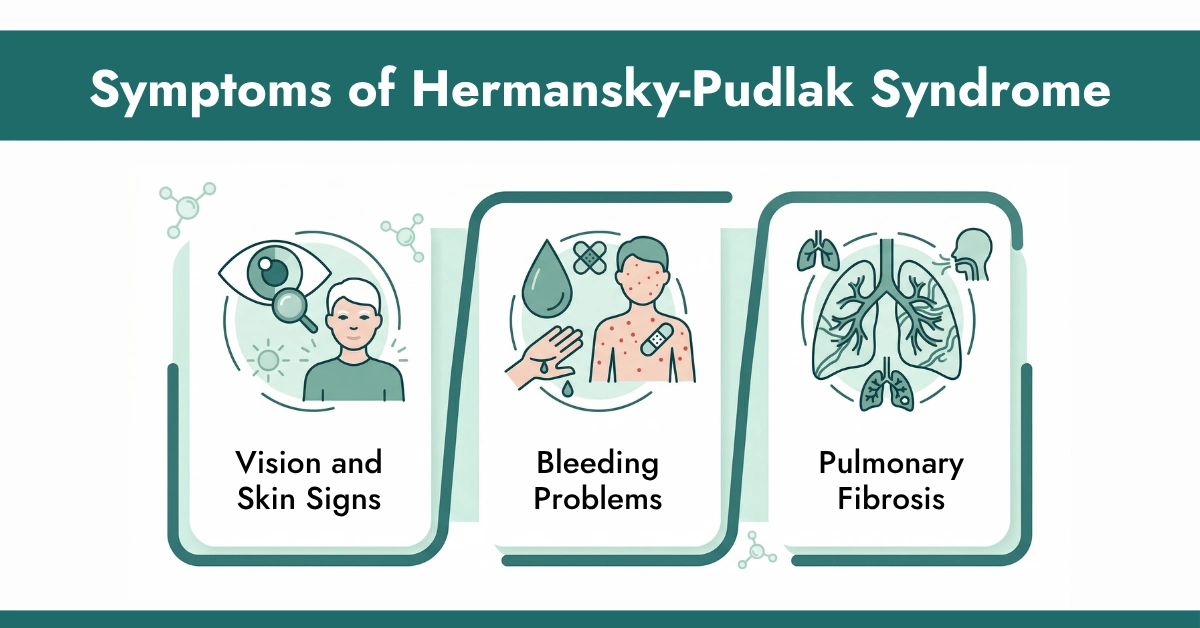
1. Vision and Skin Signs:
Patients with HPS often have pale skin, white or light hair, and light-colored eyes. Common symptoms include:
- Involuntary eye movement (nystagmus).
- Light sensitivity.
- Reduced vision.
Due to reduced melanin, individuals with HPS also have a higher risk of skin cancer.
2. Bleeding Problems:
HPS patients bruise easily and experience prolonged bleeding. Even minor cuts, dental procedures, or surgeries can lead to severe complications due to platelet dysfunction, where platelets lack dense bodies necessary for clotting.
Without early diagnosis, surgeries and medical procedures are carried out without precaution, risking severe hemorrhage. Proper diagnosis can help prevent these risks.
3. Pulmonary Fibrosis:
The most dangerous aspect of HPS is pulmonary fibrosis, progressive lung scarring that occurs in types 1, 2, and 4. This condition typically emerges in the early thirties and can severely affect breathing, reducing life expectancy.
Early detection of pulmonary fibrosis through genetic testing can be lifesaving by enabling timely interventions.
According to the NIH’s Genetic and Rare Diseases Information Center, most patients with HPS-related pulmonary fibrosis survive less than 10 years after symptoms begin. Early detection is not optional; it is lifesaving.
The Genetic Causes Behind HPS
HPS is not caused by a single gene. It results from mutations in at least nine different genes, each disrupting lysosome-related organelles (LROs), tiny cell structures essential for pigmentation, blood clotting, and lung function.
The three genes that cause HPS:
- HPS1: Responsible for ~75% of Puerto Rican cases.
- HPS3: Common in central Puerto Rico and other populations.
- HPS4, HPS5, HPS6: Each account for a smaller percentage.
- AP3B1, BLOC1S3, DTNBP1, BLOC1S6: Rarer but clinically significant.
Mutations in these genes prevent LROs from forming correctly, disrupting melanin production, platelet function, and lung cell integrity all at once.
How HPS Is Inherited:
HPS is an autosomal recessive partner; both parents must pass a defective gene copy. Carriers appear healthy but carry a 25% risk per pregnancy of having an affected child.
If HPS runs in your family, genetic counseling is strongly recommended before having children.
The 11 Types of Hermansky-Pudlak Syndrome
HPS is not one condition. It is a spectrum of 11 distinct types, each caused by a different gene mutation and carrying different clinical outcomes.
- Severe Types: Types 1, 2, and 4 are the most dangerous. All three are directly linked to pulmonary fibrosis and carry the highest risk of early death. Type 1 dominates Puerto Rican cases (~75%). Type 2 additionally causes immune deficiencies, making patients highly vulnerable to repeated infections.
- Milder Types: Types 3, 5, and 6 present milder symptoms. Vision problems and mild bleeding tendencies occur, but pulmonary fibrosis typically does not develop. Types 7 through 11 are extremely rare, and limited data exists on the full clinical impact.
Knowing your specific subtype through HPS genetic testing directly shapes your treatment plan, surgical protocols, and long-term monitoring needs.
What Happens Without a Diagnosis?
This is where many patients with HPS suffer: Without a confirmed diagnosis. Individuals undergo necessary procedures, surgeries, and treatments that fail to account for their bleeding tendencies or lung complications.
For Example:
- Surgeons operate without accounting for bleeding diathesis, causing preventable hemorrhages.
- Ophthalmologists treat vision problems without recognizing the underlying syndrome.
- Pulmonologists discover lung scarring too late to meaningfully slow its progression.
Families visit multiple specialists for years, receiving partial explanations for each symptom. Nobody connects the dots.
Misdiagnosis is common. Many HPS cases are initially mistaken for simple albinism or isolated platelet disorders, leading to years of confusion.
A single HPS gene panel test can end years of diagnostic confusion, often within just a few weeks.
Hermansky-Pudlak Syndrome Genetic Testing
Genetic testing is the only definitive way to confirm HPS. It identifies your subtype and shapes every care decision that follows.
What Does an HPS Gene Panel Cover?
An HPS NGS panel sequences multiple genes associated with the condition, including HPS1, HPS3, HPS4, HPS5, HPS6, AP3B1, BLOC1S3, DTNBP1, and BLOC1S6, to identify exact pathogenic variants.
Results help doctors:
- Predict likely complications by subtype.
- Adjust surgical protocols for bleeding safety.
- Guide to family risk planning.
Who Should Get Tested?
Consider Hermansky-Pudlak genetic testing if you have:
- Unexplained oculocutaneous albinism.
- Easy bruising or prolonged bleeding.
- Breathing difficulties alongside albinism signs.
- Family history of HPS.
At RPh Labs, we offer CLIA-accredited PGx testing to help HPS patients understand how their genetics affect medication safety. HPS patients must avoid NSAIDs, certain anticoagulants, and other drugs that worsen bleeding, and our test makes that clear.
Our at-home cheek-swab kit covers 240+ medications, delivers results in 7-10 business days, and is HSA/FSA eligible. No blood sample is required.
Managing Life With HPS: Medications, Care, and Genetic Testing
Medications HPS Patients Should Avoid:
- NSAIDs (e.g., ibuprofen, aspirin).
- Anticoagulants and blood thinners.
- Fish oil supplements (which can increase bleeding risks).
Many HPS patients unknowingly use harmful medications because their diagnosis wasn’t made in time.
How Pharmacogenomics Protects HPS Patients
Pharmacogenomic (PGx) testing reveals how your genes process medications. By knowing which medications are safe, patients can avoid dangerous reactions and tailor their treatment plans accordingly.
At RPh Labs, our PGx testing provides a personalized medication safety report, helping to eliminate the guesswork in medication management.
Conclusion
Hermansky-Pudlak Syndrome is rare, but its consequences are serious and largely preventable with early action. Genetic testing confirms the diagnosis, identifies your subtype, and shapes every clinical decision that follows.
If you or someone you love shows signs of HPS, don’t wait. Talk to your doctor about an HPS gene panel test today.
Order your at-home RPh Labs PGx test at RPh Labs, results in 7-10 business days, HSA/FSA eligible. Connect with us on Facebook and Instagram for updates on personalized medicine and genetic health.
Your genes tell a story. Make sure your care team can read it.
Disclaimer:
The information provided in this article is for educational purposes only and should not be considered medical advice. Always consult with a healthcare professional for diagnosis and treatment options. RPh Labs doesn’t offer genetic testing for Hermansky-Pudlak Syndrome but provides pharmacogenomic testing to support safe medication management. Images are AI-generated just for illustration purposes.
Frequently Asked Question
There is currently no cure for HPS. Care focuses on managing complications, monitoring lung function, preventing bleeding events, and protecting skin from UV damage.
No, carriers with one mutated gene copy show no symptoms. Both copies must be defective for the condition to develop.
Regular albinism affects pigmentation only. HPS also causes platelet dysfunction and, in severe types, fatal pulmonary fibrosis, making it a complex multi-system disorder.
Testing can be performed at any age, including newborns. Earlier testing enables earlier intervention and significantly better long-term outcomes.
It depends on the subtype. Types 1, 2, and 4 carry a serious risk due to pulmonary fibrosis. Types 3, 5, and 6 typically allow a normal lifespan with proper management.
RPh Labs specializes in pharmacogenomic testing, helping HPS patients identify safe medications based on their genetic profile. For full HPS gene panel sequencing, a specialist genetics lab referral is recommended alongside PGx testing.
Leave a Reply