



Noticing an unexplained rash, a sore throat that won’t quit, or swollen glands can be unsettling, especially if HIV crosses your mind. HIV symptoms in women often look different from HIV symptoms in men, which makes early detection confusing for a lot of people.
Some people feel flu-like within weeks of exposure. Others notice nothing for years. This guide covers the early signs of HIV in women and men, how untreated HIV progresses to AIDS, and how doctors diagnose and treat it today, including why genetics increasingly shape which medications work best.
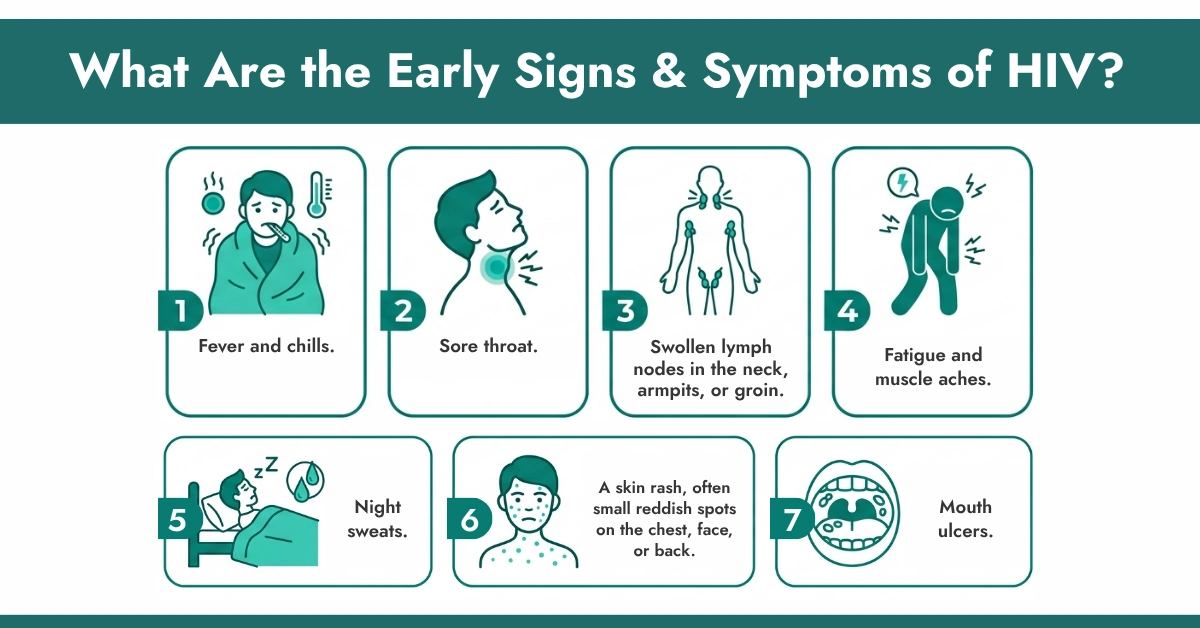
What Are the Early Signs & Symptoms of HIV?
Most early symptoms appear 2-4 weeks after exposure, a phase called acute HIV infection. The immune system’s response feels a lot like the flu.
Common early signs include:
- Fever and chills.
- Sore throat.
- Swollen lymph nodes in the neck, armpits, or groin.
- Fatigue and muscle aches.
- Night sweats.
- A skin rash, often small reddish spots on the chest, face, or back.
- Mouth ulcers.
These symptoms typically fade within one to four weeks, even without treatment. That disappearance is misleading; the virus keeps replicating quietly in the background. The CDC recommends HIV testing at least once for everyone between ages 13 and 64, regardless of symptoms. After a recent possible exposure, post-exposure prophylaxis (PEP), started within 72 hours, can still prevent infection.
What Are the Symptoms of HIV in Women?
Women experience the early signs above, plus reproductive symptoms tied to a weakened immune response.
- Vaginal yeast infections that recur several times a year or resist standard treatment
- Bacterial vaginosis that keeps coming back.
- Pelvic inflammatory disease (PID), sometimes more severe or slower to resolve than in women without HIV.
- Menstrual changes, including missed periods or heavier bleeding.
- A higher risk of HPV-related cervical changes, since HIV limits the immune system’s ability to clear the virus.
Frequent, hard-to-treat yeast infections are one of the more overlooked early indicators of HIV in women. Many people treat the infection itself and never connect it to an underlying cause.
HIV during pregnancy also requires careful management. Modern treatment can lower the risk of passing HIV to a baby to under 1%, which we cover later in this guide.
What Are the Symptoms of HIV in Men?
Men experience the same early flu-like symptoms, along with some male-specific signs.
- Genital ulcers or sores that heal slowly or recur.
- Erectile dysfunction, which research links to roughly 40-60% of men living with HIV.
- Hypogonadism (low testosterone), which can cause fatigue, low libido, and reduced muscle mass.
- Proctitis, or rectal inflammation, more common among men who have sex with men.
- Painful open sores on the penis or anus.
Erectile dysfunction in men with HIV is often a hormone problem, not just stress or a medication side effect. Checking testosterone levels can uncover a treatable cause that’s easy to miss.
Persistent genital sores are also worth a doctor’s visit, since HIV and other sexually transmitted infections frequently travel together.
How Do HIV Symptoms Progress Into AIDS (Stage 3 HIV)?
Without treatment, HIV moves through three stages, defined largely by CD4 count, the immune cells the virus destroys.
| Stage | CD4 Count | What You Might Notice |
| Acute HIV | Drops sharply, then partially recovers | Flu-like symptoms for one to four weeks. |
| Chronic HIV | 200-499 cells/mm³ | Few or no symptoms; can last years, especially with treatment. |
| AIDS | Below 200 cells/mm³, or an AIDS-defining illness | Rapid weight loss, recurring fever, chronic diarrhea, opportunistic infections. |
AIDS is not an automatic outcome. With early antiretroviral therapy (ART), people living with HIV can live full, healthy lives and never progress to AIDS. This makes early recognition of symptoms absolutely essential.
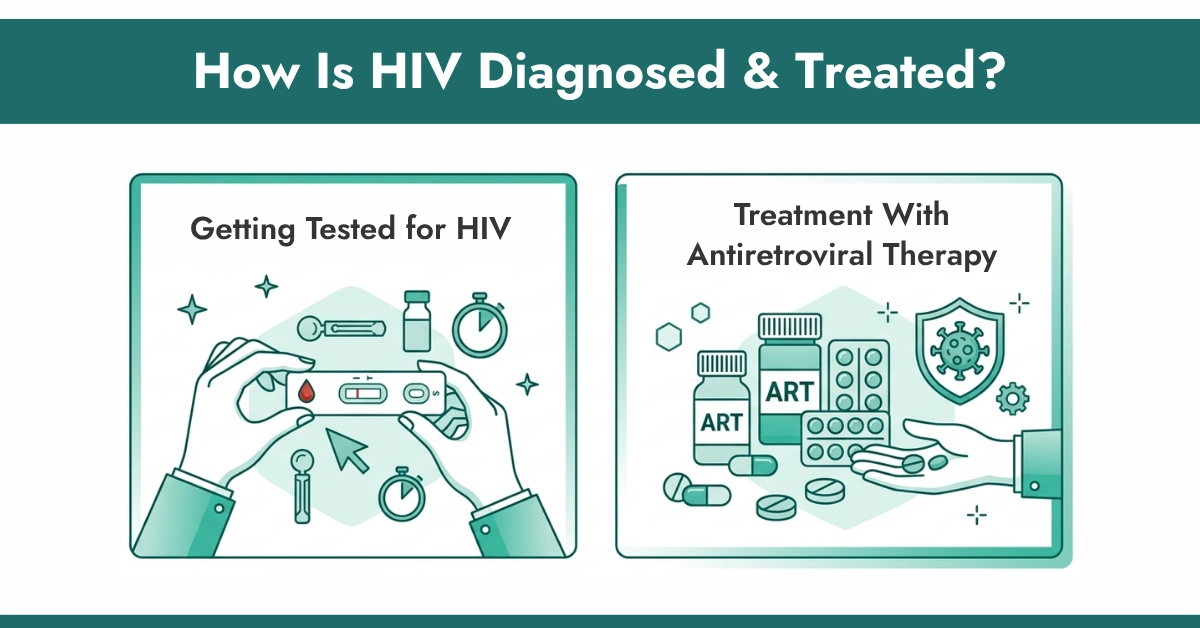
How Is HIV Diagnosed & Treated?
- Getting Tested for HIV: HIV tests check blood or oral fluid for antibodies, antigens, or the virus’s genetic material. Most modern lab tests can detect HIV within a few weeks of exposure, though the exact window depends on the test type. A reactive result is always confirmed with a second, more specific test before diagnosis.
- Treatment With Antiretroviral Therapy (ART): There’s no cure, but ART controls HIV effectively. Most people on treatment reach an undetectable viral load, meaning they can’t transmit HIV sexually and can expect a near-normal lifespan.
Nevirapine, one of the first NNRTI-class antiretrovirals, illustrates why genetics matter in HIV care. Current U.S. treatment guidelines no longer recommend nevirapine as standard adult therapy, largely due to liver toxicity and hypersensitivity risks. It still plays a role in newborn prophylaxis against mother-to-child transmission. Research has tied much of that side-effect risk to variations in the CYP2B6 gene, which controls how quickly the body breaks the drug down.
Can Genetic Testing Help Personalize HIV & AIDS Treatment?
Yes. Pharmacogenomic (PGx) testing analyzes how your specific genes process medications, flagging risks before you ever fill a prescription.
CYP2B6, the same gene tied to nevirapine metabolism, is among the 20 genes covered by RPh Labs’ Comprehensive PGx panel. The CLIA-accredited test uses a simple cheek swab, no blood draw, and shows how your body may respond to 240+ medications across mental health, pain management, cardiology, and other specialties.
This kind of testing matters most for the harder-to-predict reactions, the rash, the liver enzyme spike, or the medication that simply doesn’t work, often discovered only after trial and error.
For anyone managing HIV alongside another chronic condition, like depression or chronic pain, knowing how your body metabolizes medications upfront can make treatment safer. Your doctor still makes the final call; the PGx report just gives them better information to work with.
How Can You Prevent HIV & Protect a Pregnancy From Transmission?
Prevention works at every stage, from avoiding exposure to protecting a baby during pregnancy.
- Use condoms consistently, and test regularly with new or multiple partners.
- Ask a doctor about PrEP if you’re at ongoing risk.
- Start PEP within 72 hours of a possible exposure.
- If you’re living with HIV, an undetectable viral load on ART means you can’t transmit it sexually (U=U).
For pregnancy, the CDC and WHO recommend ART throughout pregnancy, not a single dose at delivery. With consistent treatment, the risk of passing HIV to a baby drops below 1%, down from a substantially higher risk without any intervention. Higher-risk newborns may still receive short-term nevirapine or zidovudine after birth as extra protection.
Conclusion:
HIV symptoms vary widely between individuals, and between women and men. Testing, not symptom-watching, is the only reliable way to know your status. With modern, increasingly personalized treatment, long-term health is realistic for almost everyone diagnosed today.
RPh Labs’ at-home PGx testing kit helps you and your doctor make more informed medication decisions, for HIV-related care and 240+ other medications. Visit RPh Labs to learn more, or follow along on Facebook and Instagram for ongoing updates on personalized medicine.
Disclaimer:
This article is for informational purposes only and doesn’t replace personalized medical advice. Talk to a healthcare provider about HIV testing, diagnosis, or treatment. Pictures in this blog are created using AI tools.
Frequently Asked Questions
HIV is the virus that attacks the immune system. AIDS, or stage 3 HIV, is the most advanced stage, diagnosed when CD4 counts fall below 200 or an opportunistic illness develops. Not everyone with HIV reaches AIDS, especially with early treatment.
HIV spreads through specific body fluids, including blood, semen, vaginal fluid, and breast milk, usually through unprotected sex or shared needles. It doesn’t spread through saliva, sweat, or casual contact.
The first signs usually resemble the flu: fever, sore throat, fatigue, swollen lymph nodes, and a rash, appearing two to four weeks after exposure and fading within a few weeks.
A doctor diagnoses AIDS through a CD4 count below 200 cells/mm³ or the presence of an AIDS-defining illness. Blood testing, not symptoms alone, confirms the stage.
Yes. Many people feel completely healthy for years while HIV quietly damages the immune system, which is exactly why routine testing matters more than waiting for symptoms.
Yes. Antiretroviral therapy controls HIV effectively. Most people on treatment live near-normal lifespans with an undetectable, untransmittable viral load.
Leave a Reply