



You’ve tried pain medication after pain medication. One barely touches the pain. Another leaves you exhausted, nauseated, or dizzy. Your doctor changes prescriptions, yet the results never seem predictable.
That happens more often than many people realize. Genetics plays a role in how your body processes many medications, making one person’s “perfect” prescription another person’s disappointment.
Chronic pain syndrome isn’t simply pain that lasts. It affects movement, mood, sleep and daily life. This article explains what chronic pain syndrome is, what causes it, how doctors treat it, and why RPh Labs’ CLIA-accredited PGx test may give your care team another piece of information when choosing certain medications.
What Is Chronic Pain Syndrome?
Chronic pain syndrome (CPS) is pain lasting more than three months, combined with real changes beyond the physical, shifts in mood, sleep, or behavior tied directly to that pain. It has its own diagnosis code (G89.4), separate from general chronic pain (G89.29). A diagnosis of chronic pain syndrome depends on documented physical and emotional effects, not only on how long the pain has been present.
- Chronic pain: any pain lasting longer than three months
- Chronic pain syndrome: chronic pain plus documented psychological or behavioral effects, such as anxiety, depression, drug dependence concerns, or complaints that seem out of proportion to physical findings
- Duration alone doesn’t make pain a “syndrome.” The added impact does.
One aspect that many articles overlook is how persistent pain can affect the nervous system. Over time, the brain and spinal cord may become more sensitive to pain signals, a phenomenon known as central sensitization. This means pain may continue even after the original injury has healed, making treatment more complex than simply addressing the initial cause.
What Causes Chronic Pain Syndrome?
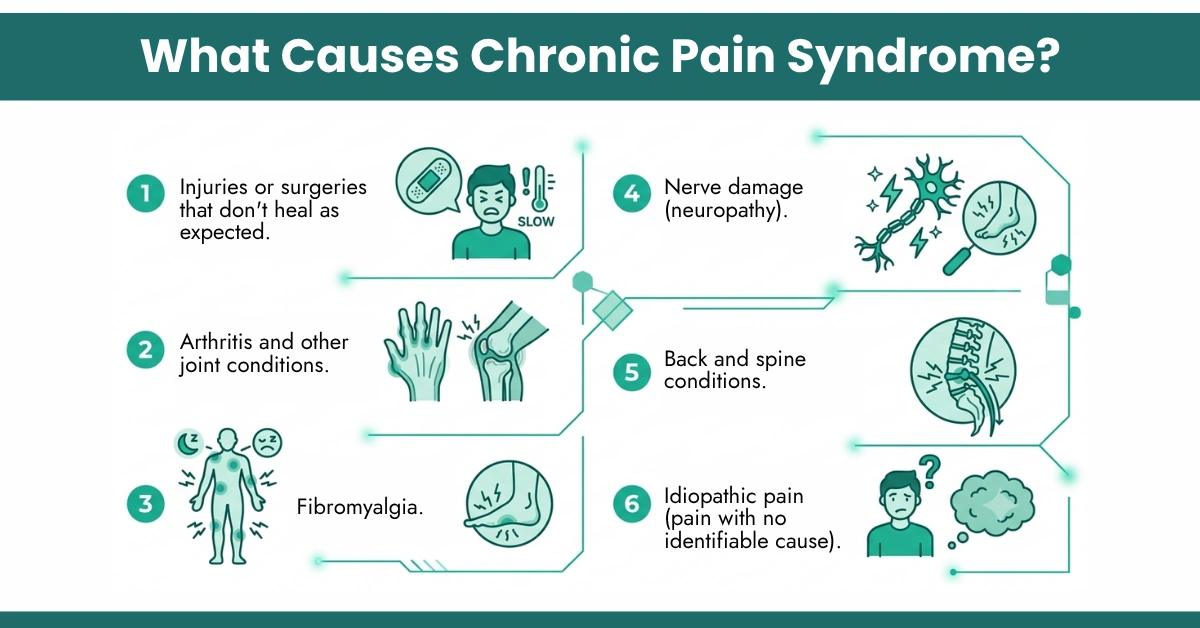
Chronic pain syndrome often starts with an injury, surgery, or illness that never fully resolves. Sometimes a clear medical condition drives it. Other times, no single cause turns up, even after testing.
Common contributors:
- Injuries or surgeries that don’t heal as expected.
- Arthritis and other joint conditions.
- Fibromyalgia.
- Nerve damage (neuropathy).
- Back and spine conditions.
- Idiopathic pain (pain with no identifiable cause).
Risk factors may include older age, diabetes, obesity, smoking, poor sleep, repetitive physical strain, anxiety, and depression. Having one or more risk factors doesn’t mean you’ll develop chronic pain syndrome, though they may increase the likelihood of persistent pain in some people.
What Are the Types and Symptoms of Chronic Pain?
Chronic pain shows up in different forms, and the pattern often hints at the cause. Some people experience pain in a single area of the body. Others feel it move around or spread across the body.
- Dull, aching pain is often muscle or joint-related.
- Sharp or stabbing pain often points to nerve involvement.
- Throbbing pain is often tied to inflammation.
- Diffuse pain spread widely, common with fibromyalgia.
- Intermittent pain comes and goes instead of staying constant.
- Pain that shifts locations shows up in different spots over weeks or months.
Common sites include the lower back, neck, joints, and muscles. Pain that touches several of these categories at once is typical with chronic pain syndrome, not a sign that anything unusual is happening.
How Does Chronic Pain Affect Your Body and Mental Health?
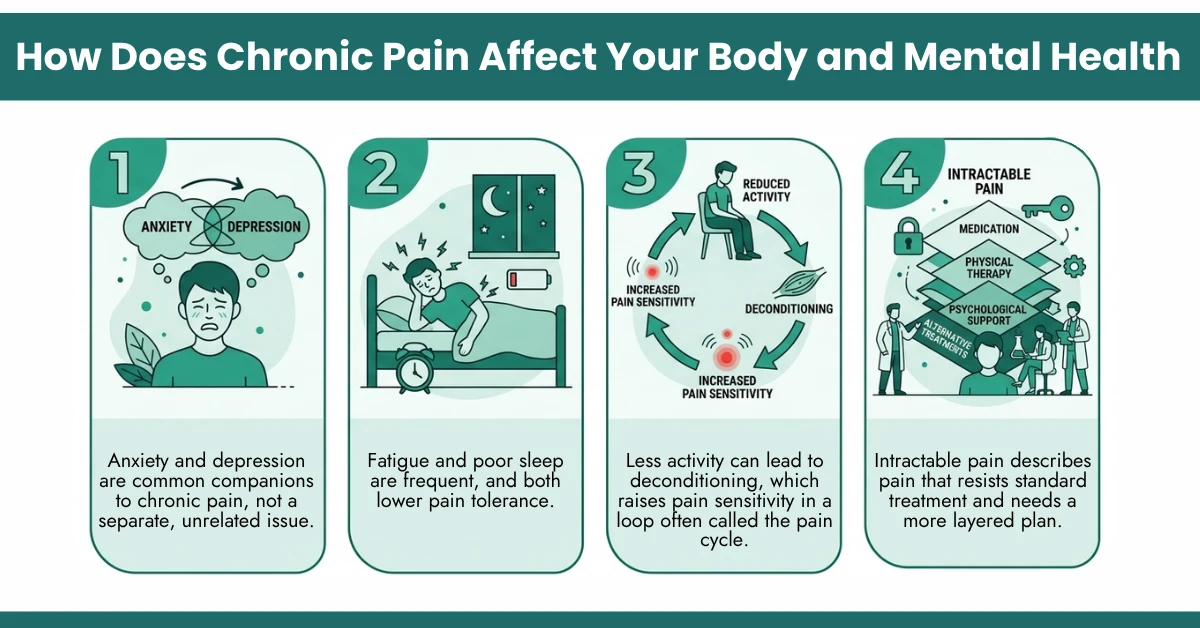
Chronic pain rarely stays confined to the body. Anxiety, depression, fatigue, and disrupted sleep show up often alongside it, and each one can make the pain itself feel worse.
- Anxiety and depression are common companions to chronic pain, not a separate, unrelated issue.
- Fatigue and poor sleep are frequent, and both lower pain tolerance.
- Less activity can lead to deconditioning, which raises pain sensitivity in a loop often called the pain cycle.
- Intractable pain describes pain that resists standard treatment and needs a more layered plan.
None of this means the pain is “in your head.” It means pain touches the whole system, not just the spot where you feel it.
How Is Chronic Pain Syndrome Treated?
Chronic pain syndrome usually responds best to a mix of approaches, not one fix. Medication, physical therapy, and psychological support each play a role, and the right combination looks different for every person.
- Medication: Several classes exist, and the right one depends on the type of pain. A doctor or pharmacist should always guide dosing.
- Physical therapy: Builds strength and function, which can lower pain over time.
- Psychological approaches: Cognitive behavioral therapy (CBT) and similar methods address the mental load pain creates.
- Lifestyle factors: Sleep, movement, and stress management all shape how much pain you feel day to day.
One reason treatment requires trial and error is that genetics affects how your body processes many pain medications.
Why Do Pain Medications Affect Everyone Differently?
Genetics plays a real role in how your body processes pain medications. That’s a big part of why a drug that works well for a friend or family member might do little for you, or bring side effects they never dealt with. The FDA provides pharmacogenomic information in the prescribing information for numerous medications, reflecting the role that genetic variation plays in drug response and clinical decision-making.
Two genes show this clearly:
- CYP2D6 affects codeine and tramadol. Your body converts these drugs into an active form to feel relief. Some people convert too little of it (weaker relief) or too much (higher side-effect risk).
- CYP2C9 affects many common NSAIDs. Some people clear these drugs more slowly, so the medication can stay active longer than a standard dose accounts for.
| Gene | Medications It Can Affect | What a Variant May Mean |
| CYP2D6 | Codeine, tramadol | Weaker pain relief, or a higher risk of side effects. |
| CYP2C9 | Common NSAIDs (ibuprofen, celecoxib, meloxicam, and similar) | Medication may stay active longer than expected at a standard dose. |
This is exactly what RPh Labs‘ at-home PGx test looks at. A cheek swab, mailed to our CLIA-accredited lab, checks how your genes may affect your response to 240+ medications, including pain drugs. See how the testing process works, from kit to results.
A genetic test doesn’t replace your doctor’s judgment or set your dose on its own. Never change a medication or its dose without talking to your prescriber first.
Conclusion:
Chronic pain syndrome affects the body and daily life at the same time, and it deserves a treatment plan built around both. Medication is often part of that plan, and genetics explains why the first option isn’t always the right one.
RPh Labs’ CLIA-accredited PGx Testing Kit gives you and your doctor another piece of information when reviewing medications that include pharmacogenomic guidance. The report evaluates genes associated with responses to 240+ medications, giving clinicians additional insight during medication selection.
Disclaimer:
This article is educational and isn’t a substitute for professional medical advice. Genetic testing gives your care team another data point; it doesn’t replace their judgment, guarantee a specific outcome, or set your dose. Always talk to your doctor or pharmacist before starting, stopping, or changing any medication.
Frequently Asked Questions
Sometimes, especially if an underlying cause resolves. More often, the goal shifts from a full cure to real management: less pain, better function, fewer flare-ups. Many people see major gains even if the pain never fully disappears.
Chronic pain is any pain lasting more than three months. Chronic pain syndrome is chronic pain combined with documented mood, sleep, or behavior changes tied to it, a distinct diagnosis, not just a longer timeline.
A PGx test shows how your genes may affect specific medications, which can rule some options in or out. It’s one input for your doctor to weigh, not a guarantee of which drug will work for you.
Genetics affects how quickly the body breaks down many drugs. Faster or slower metabolism can mean a standard dose does too little or too much for a given person. Always follow your prescriber’s dosing guidance.
Eligibility depends on the underlying condition, medical records, and how much the pain limits daily activities. A healthcare professional and, if needed, a disability benefits specialist can explain your specific situation.
No. Fibromyalgia is a specific condition that causes widespread pain and fatigue. Chronic pain syndrome is a broader condition involving persistent pain that affects daily life, mood, or sleep. Fibromyalgia can be one cause of chronic pain syndrome, but they are not the same diagnosis.
No. Pharmacogenomic (PGx) testing is one source of information that may assist medication decisions for certain drugs. Your doctor considers your genetic results alongside your symptoms, medical history, current medications, and overall health before making treatment recommendations.
Leave a Reply