



A drop in sex drive can show up quietly. You stop initiating, and sex starts to feel like a chore, or your body doesn’t respond the way it used to. Many women blame themselves or their relationships before realizing that biology, hormones, and medications can influence sexual desire.
Low libido in women is common, and it rarely comes down to one cause. Hormones, mental health, certain medications, and genetics can all play a part, sometimes together.
This article walks through the most common triggers, like how your body metabolizes certain antidepressants at the genetic level.
What Is Low Libido in Women & What Causes It?
Low libido means a reduced interest in sexual activity compared with a person’s usual level of desire. Low libido in women usually comes from a mix of factors, not one single trigger. Hormonal shifts, mental health, certain medications, and physical health conditions are the most common contributors, and they often overlap.
Cleveland Clinic puts low sex drive at roughly 1 in 5 men and an even larger share of women, at some point in life.
| Category | Common Contributors |
| Hormonal & life stage | Perimenopause, menopause, pregnancy, postpartum recovery, low testosterone |
| Mental health & medications | Depression, chronic stress, SSRIs and certain other antidepressants, some hormonal birth control |
| Physical health | Thyroid disorders, chronic pain, vaginal dryness, prior gynecologic surgery |
| Relationship & lifestyle | Relationship stress, poor sleep, body image, major life transitions |
Genetics is one of the least-discussed pieces of this puzzle. How your body metabolizes a medication, not just whether you take it, can shape whether that medication becomes part of the problem. That’s where the rest of this article spends most of its time.
What Is HSDD & How Is Low Libido Diagnosed?
Hypoactive sexual desire disorder (HSDD) is the clinical term for a persistent, distressing lack of sexual desire. It’s coded as ICD-10 F52.0 when distress is present, and as R68.82 (decreased libido) when the cause isn’t yet determined, or distress isn’t part of the picture.
HSDD isn’t the same as a slow week during a stressful month; the definition requires the pattern to persist and to cause real distress, not just a temporary dip. Diagnosis usually starts with a conversation about timeline, distress level, and recent changes (a new medication, a relationship shift, a stretch of poor sleep) rather than a single lab test.
Two medications, flibanserin (Addyi) and bremelanotide (Vyleesi), carry FDA approval specifically for HSDD. These medications are approved for specific groups of women and are not suitable for everyone.
In December 2025, the FDA expanded flibanserin’s approval to postmenopausal women under 65, after a decade of the drug being limited to premenopausal use.
Can Antidepressants Lower Your Sex Drive?
Yes. Sexual side effects lower desire, delay arousal, trouble reaching orgasm; these are a recognized class effect of SSRIs, the antidepressant family covering citalopram, fluoxetine, and paroxetine. The mechanism traces back to serotonin’s role in sexual response, not a personal or relationship failure.
Two genes, CYP2D6 and CYP2C19, control how fast the liver clears many SSRIs, according to pharmacogenetics guidelines for these medications from the Clinical Pharmacogenetics Implementation Consortium. A poor metabolizer clears a drug slowly, so a standard dose can sit at a higher level in the bloodstream than intended, and some research ties that higher exposure to a greater chance of sexual side effects.
One pharmacogenetic study using the CAN-BIND-1 depression research cohort found CYP2C19 metabolizer status was linked to changes in sexual arousal on escitalopram; the researchers noted that genotyping before starting the medication could guide choices that sidestep this side effect. This research area is still developing, and metabolizer status is one factor among several. RPh Labs’ PGx test reports on CYP2C19, CYP2D6, and other genes tied to antidepressants like citalopram, fluoxetine, and paroxetine; see the complete gene and medication list.
How Do Menopause and Hormones Affect Desire?
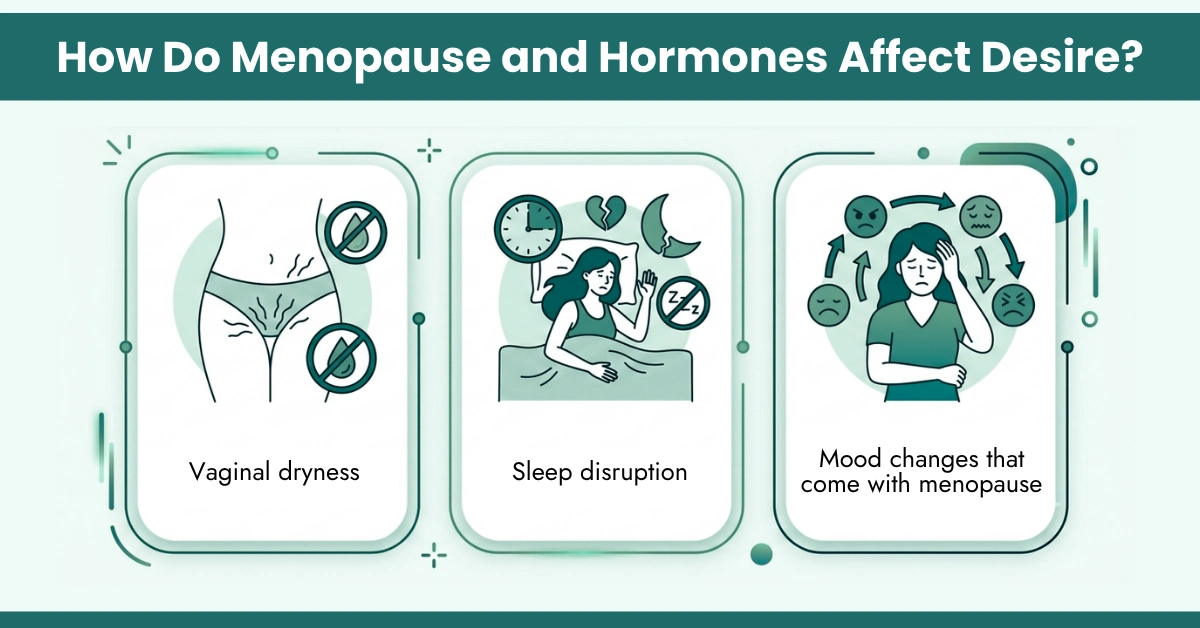
Estrogen and testosterone both decline during the menopause transition, and that shift is one of the most common reasons libido drops in midlife.
- Vaginal dryness.
- Sleep disruption.
- Mood changes that come with menopause.
Some women notice desire return once hot flashes, sleep, and mood settle after menopause; others don’t, especially if testosterone stays low.
Thyroid disorders and a prior hysterectomy, especially with ovary removal, can produce a similar hormonal drop and deserve the same workup. Low testosterone and thyroid conditions are both worth ruling out with a provider, rather than assuming a change in desire is simply menopause.
Can Birth Control Affect Libido?
Yes, for some women. Combined hormonal contraceptives the pill, the patch, the vaginal ring are linked to lower sex drive in a subset of users.
The effect isn’t universal, and plenty of women notice no change at all. If desire dropped after starting or switching hormonal birth control, that timing is worth raising at your next appointment; a different formulation or a non-hormonal option sometimes resolves it. This is a conversation for a prescriber, not a reason to stop a medication on your own.
Is Low Sex Drive During Pregnancy or Postpartum Normal?
Yes. Shifting hormones, fatigue, nausea, and body changes during pregnancy commonly lower desire, and the pattern often continues postpartum, when sleep debt, breastfeeding hormones, and physical healing all compete for the same energy.
Desire often returns gradually as hormones settle and sleep improves, though timelines vary widely between women. A drop that continues well past the postpartum window, or one that comes with persistent low mood, is worth raising with an OB-GYN or primary care provider rather than waiting it out.
Can Pharmacogenetic Testing Explain Medication-Related Low Libido?
Not by itself. A PGx test doesn’t diagnose low libido, and it isn’t a standalone treatment. What it shows is how your body is likely to metabolize specific medications, several antidepressants among them, based on your genetic makeup, information a provider can weigh if a medication’s side effects are part of the picture. The FDA maintains a public table of medications with pharmacogenomic information in their labeling, for anyone who wants the regulatory backdrop.
RPh Labs’ PGx testing kit collects a cheek swab at home and runs it through a CLIA-accredited lab, with results back in 7-10 business days through a secure account. Ordering a kit, activating it, mailing back the sample, and reading the results are the four steps outlined here, and a clinical pharmacist or genetic counselor is on hand if questions come up. Testing is currently available in 45 states a handful, New York, and California, among them, aren’t yet served, so check current coverage before ordering.
Conclusion:
Low libido in women is common, and it’s rarely about willpower or attraction. Hormones, mental health, medications, and genetics all factor in, sometimes at once. If an antidepressant is on your list of possible causes, a PGx test shows how your body handles it at the genetic level, one more piece of information for the conversation with your provider.
Disclaimer:
This article is educational and isn’t a substitute for individualized medical or genetic counseling advice. Talk with your doctor, gynecologist, or RPh Labs’ clinical team about your specific symptoms, medications, and genetic results.
Frequently Asked Questions
There’s no universal number. Clinicians look at whether desire has dropped from your own baseline for at least several months, and whether it causes distress. A change without distress is often coded as decreased libido (R68.82); with distress, it may meet criteria for HSDD (F52.0).
Start with the basics that affect desire indirectly: sleep, stress levels, and time with a partner outside the bedroom. If a medication, hormone shift, or mood change is driving the drop, addressing that underlying cause tends to matter more than any single technique. A provider can sort out which one applies to you.
Evidence for most over-the-counter libido supplements is limited or mixed. The FDA doesn’t review supplements before they reach shelves the same way it reviews prescription drugs. If you’re considering one, check with your pharmacist or provider first, especially if you take other medications, since interactions are possible.
No. The test doesn’t diagnose low libido or any other condition. It reports how your body is likely to metabolize 240+ medications, several of them antidepressants, based on your genes. Your provider or RPh Labs’ clinical team interprets what that means for your specific prescriptions.
Coverage varies by plan. RPh Labs accepts several insurance plans and has a 4-installment, no-interest payment option for anyone paying out of pocket. Check current accepted plans or state availability before ordering.
Leave a Reply